


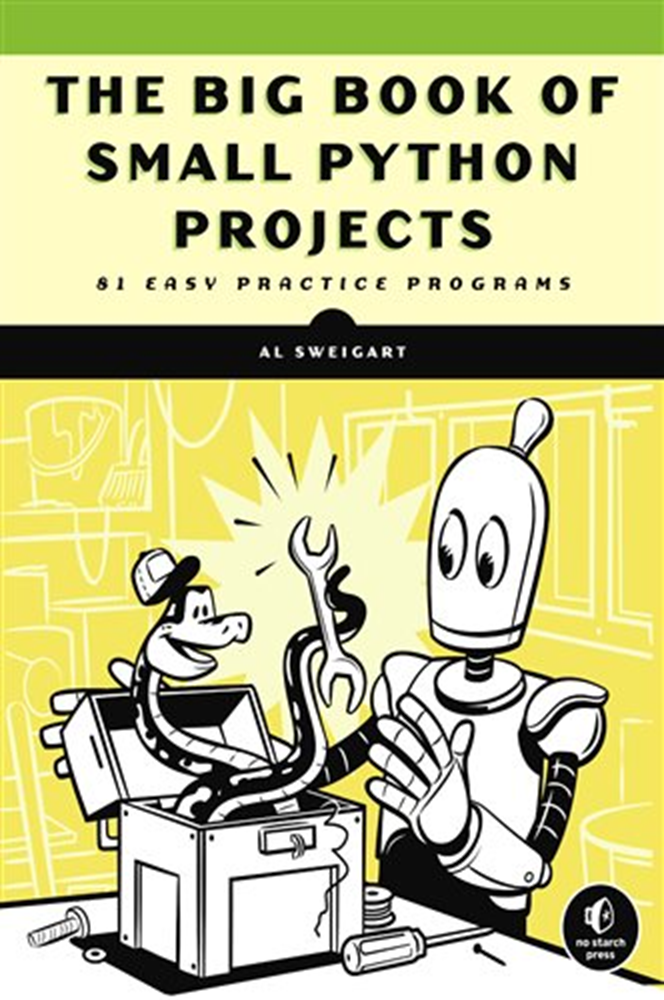
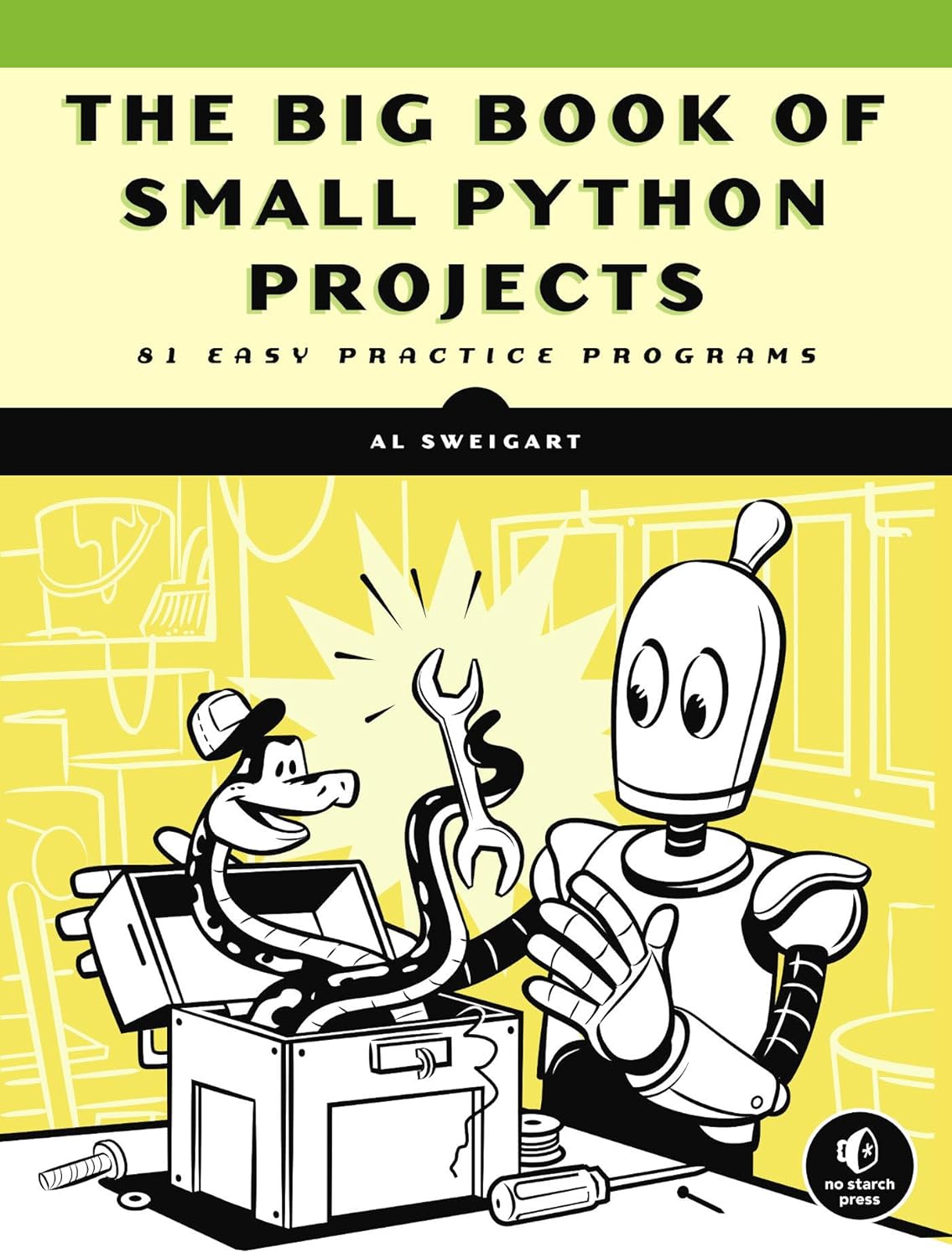
The Big Book of Small Python Projects by Al Sweigart is a practical, beginner-friendly programming book that teaches Python through 81 fun, small, and hands-on projects. Instead of long theory, learners build real programs such as games, simulations, text generators, number puzzles, animations, and utilities.
This book is ideal for:
Beginners who want to learn Python by doing
Students who already know the basics and want practice
Self-learners who want quick, motivating projects
Teachers and training centers that want structured exercises
Each project is small, focused, and easy to complete in a short time — helping learners build confidence while learning core Python concepts like variables, loops, functions, conditionals, strings, randomness, and simple logic.
By the end of the book, learners will not only understand Python syntax but also develop the problem-solving mindset of a real programmer.
| Item | Details |
|---|---|
| Title | The Big Book of Small Python Projects |
| Author | Al Sweigart |
| Publisher | No Starch Press |
| Language | English |
| Format | Print / Digital (depending on your store) |
| Skill Level | Beginner to Early-Intermediate |
| Projects | 81 small Python programs |
| Programming Language | Python 3 |
| Topics Covered | Loops, variables, strings, lists, functions, logic, randomness |
| Suitable For | Students, teachers, self-learners, coding clubs |
| Teaching Style | Project-based learning |
| Prerequisites | Basic computer literacy; no advanced coding required |
Yes. It is designed specifically for beginners and early learners. You only need basic computer skills and a willingness to learn.
Basic Python knowledge is helpful, but not required. The projects are simple and explained step-by-step.
Suitable for teens, university students, and adults. It is safe and educational for all ages.
It focuses more on practice than heavy theory. You learn concepts while building projects.
Yes. It is excellent for schools, bootcamps, coding clubs, and online training platforms like TebtalksAcademy.
Simple games
Number guessing programs
Text generators
Random simulations
Mini tools and logic puzzles
Yes. All projects are based on Python 3.
No. Once you have Python installed and the book, you can practice offline.
Yes. It builds logical thinking and coding confidence, which is useful for exams, school assessments, and interviews.
This book gives you structured, progressive, and organized practice instead of scattered tutorials. You move from simple to more complex projects in a clear learning path.